The Gospel Doesn’t Kick Down Doors
Faith and work?
We say it all the time. Faith and work. Faith at work.
Listen to how that sounds. As if they are two separate things we have to figure out how to bring together.
Jesus never makes that split. You won't find Him teaching a seminar on faith at the office. It would be like saying faith at home. Faith in the city. Faith at the grocery store.
So why do we need instruction on how to live out our faith in different settings? Maybe because somewhere along the way we turned faith into a switch. Something we flip on when we walk into the right room.
That was never the point. Faith is meant to transform us so deeply that our whole life responds. Not a switch. Not a method. A life.
Nobody loves their wife at work
Think about how you love your spouse. Or a close friend.
You never ask, "How do I express my love for her at work?" You don't need a strategy for loving your friend at the ballgame.
That person has become part of your life. So naturally you begin to share them. You talk about them. You make decisions with them in mind. Your life is no longer about serving yourself. It's about serving someone.
Researchers have actually measured this. Psychologists Arthur and Elaine Aron call it "inclusion of the other in the self." In close relationships, each person starts to experience the other's perspectives and identity as, in some sense, their own. In one line of studies, people even processed a loved one's physical pain the way they processed their own. They did not do that for a stranger.
Love doesn't stay in a compartment. It moves in.
Using faith or living it
The same is true of faith.
Decades ago, psychologist Gordon Allport noticed two very different kinds of religious people. His summary is hard to forget: one person uses his religion, the other lives his.
Used faith is a tool. You pull it out when it helps. Lived faith is the lens you see everything through.
Later researchers studied Christians and found something similar. Some practice their faith out of pressure. Guilt. Fear of disapproval. Wanting to look right. Others practice it because they have embraced it as their own. The second group was healthier and more whole. The first group carried more strain.
That tracks with what I've seen in my years of ministry. When faith is a rule we keep, we need instructions for every setting. When faith is a love we've received, it shows up everywhere on its own.
The church hasn't always helped. In Barna's study of working Christians, only about one in four described the kind of integration where their faith and their work actually connect. Most of us have learned to keep Jesus in a box we open on Sunday.
The door my friend kicked
A friend of mine is a police officer. A while back he had a minor surgery. The doctor's orders were simple. Don't strain. Let it heal.
A few days later his team went on a house raid. And he did what he had always done. He kicked the door down.
He tore his sutures. He damaged the very thing that was supposed to be healing.
I think a lot of us share our faith that way. We feel the pressure to make something happen. So we force the conversation. We push our way in. We demand a hearing.
And we end up injuring ourselves. Sometimes we injure the people on the other side of the door too.
The gospel never asks us to kick doors down.
Pray for the door
Look at how the apostle Paul asks for help:
"Pray also for us, that God may open to us a door for the word, to declare the mystery of Christ." (Colossians 4:3, ESV)
Notice the picture. A door. And notice who opens it. God does.
Paul wrote those words from prison. He was sitting behind a door he could not open. He did not try to kick it down. He prayed and he waited.
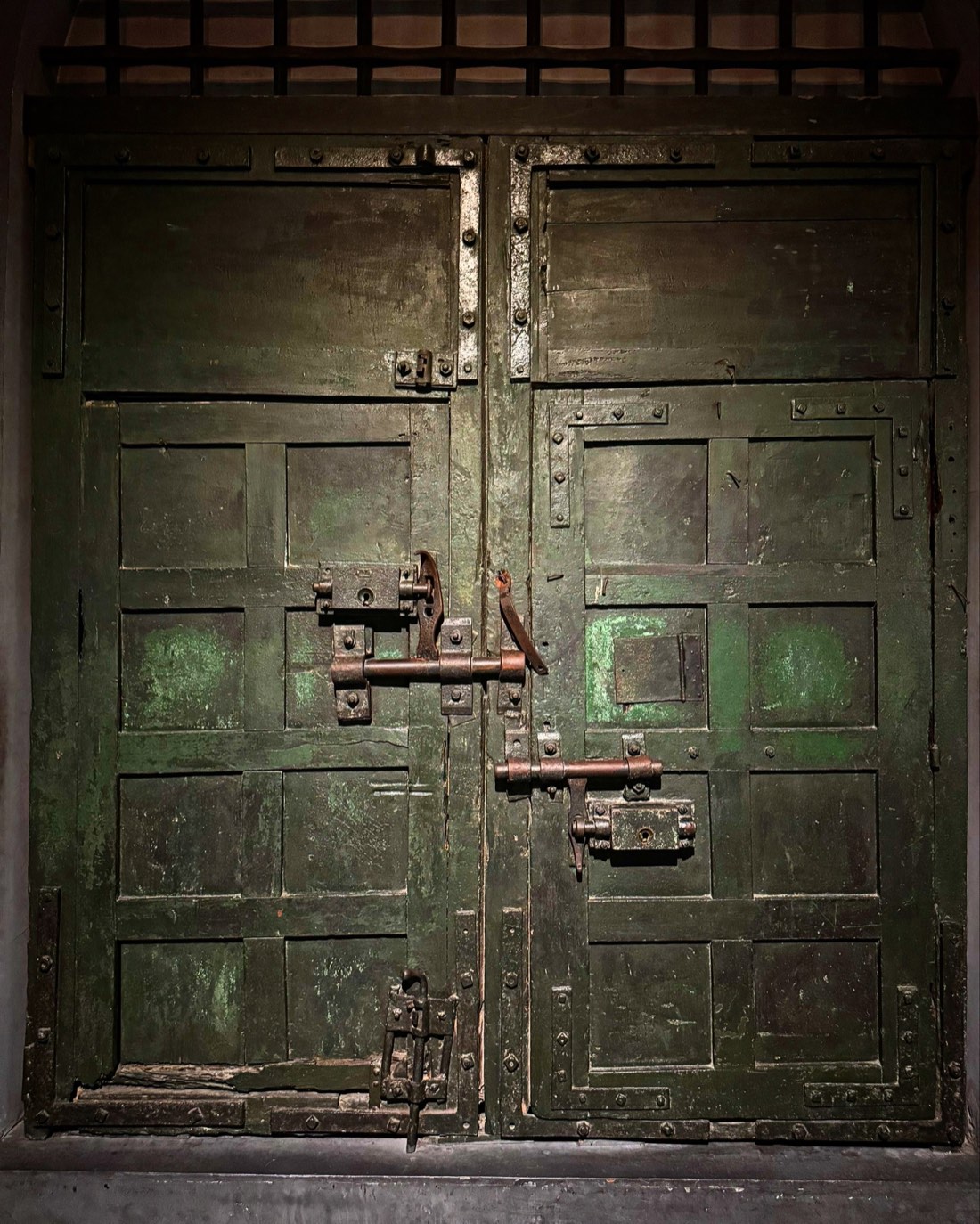
Notice what he wanted to say once the door opened. Not a winning argument. Not the "right answer." A mystery. Something wonderful he was still in awe of.
A couple of verses later he tells the church to walk wisely toward outsiders and to let their speech always be gracious, seasoned with salt (Colossians 4:5–6, ESV).
That is not forcing the gospel on people. It is praying, waiting, and then speaking with grace about Someone you love.
Just love Him
So maybe the question isn't how to bring your faith to work.
Maybe the question is whether Jesus has moved in.
When He has, you won't need a switch. He'll show up in how you lead a meeting, how you treat the person who frustrates you, how you handle a mistake. Not because you followed a method. Because He means a great deal to you.
And when a door opens, you won't need to kick it. You'll walk through it gently and tell someone about the mystery that changed your life.
Pray for the door. Wait for the door. Then speak.
Sources
- G. W. Allport and J. M. Ross, "Personal Religious Orientation and Prejudice," Journal of Personality and Social Psychology 5 (1967): 432–443. Summary
- R. M. Ryan, S. Rigby, and K. King, "Two Types of Religious Internalization and Their Relations to Religious Orientations and Mental Health," Journal of Personality and Social Psychology 65 (1993): 586–596. Overview
- B. Branand, D. Mashek, and A. Aron, "Pair-Bonding as Inclusion of Other in the Self: A Literature Review," Frontiers in Psychology 10 (2019): 2399. Article
- Barna Group with Abilene Christian University, Christians at Work (2018). Interview with David Kinnaman
Scripture quotations are from the ESV® Bible (The Holy Bible, English Standard Version®).